
Reviewed · GOBI DESERT TOURS
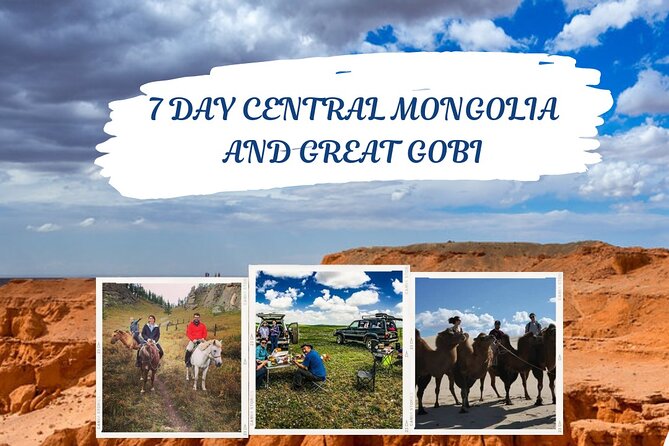
7 days Central Mongolia and Great Gobi
Mongolia is all about wide skies and big distances, and this 7-day route is a smart way to experience both central Mongolia and the Great Gobi without doing the driving yourself. I love how the trip strings together desert culture and Mongol history in one smooth flow, from rock monuments to old capitals.
Two things I especially like: first, you get private touring with a guide who can handle English and Japanese, which makes those long explanations feel painless. Second, the days mix physical moments, like camel time, with classic sightseeing so you do not feel stuck staring at a list of stops.
One thing to keep in mind is that desert weather can be unpredictable. This experience runs with a good-weather requirement, so if conditions are poor, dates can shift or you might get a full refund.
Key things to know before you go
- Private, personalized pacing with round-trip transfers from Ulaanbaatar and pickup offered
- Family yurts and tourist camps plus local ger hostels, depending on the night
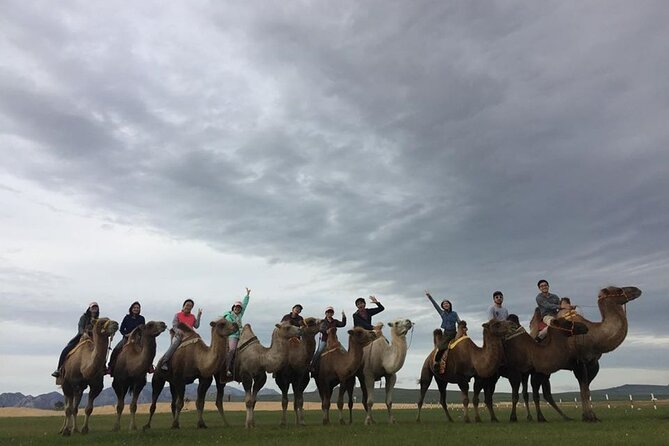
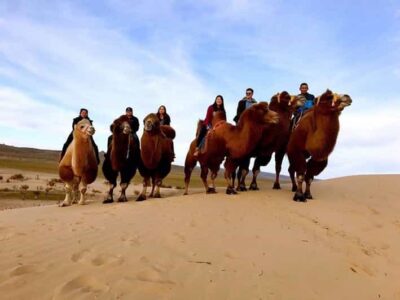
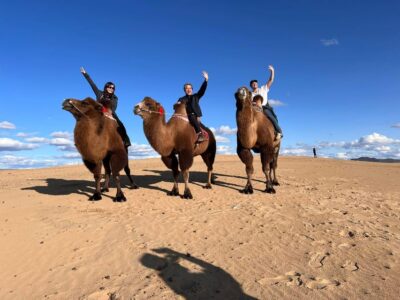
- Camel riding and camel trekking built into the sand-dune days
- Major “Mongol story” stops like Chinggis Khaan sites, Kharkhorin, and monastic ruins
- Most meals included (breakfast 6, lunch 7, dinner 5), with snack and fruit left to you
- Admission tickets are partly covered, with several stops including tickets and a couple listed as free
From Ulaanbaatar to the Gobi, with pickup and a private pace
This is a private tour, so your group sets the rhythm. That matters on a route like this, where some days are mostly driving between distinct places and others are about getting outside for monuments, ruins, and dune moments. You also avoid the awkwardness of trying to coordinate schedules with other groups.
You start at Danista Nomads, Orkhon Street 1-37, BGD-16 khoroo, Ulaanbaatar 16040, with a start time of 8:30 am. The tour ends back at the same meeting point, so you are not thinking about how to get from one part of the route to another. Round-trip transfers from Ulaanbaatar are included, and pickup is offered.
The price is $1,500 per person, and the value comes from what is rolled in: accommodations, most meals, transport back and forth from Ulaanbaatar, plus multiple sightseeing entries. If you tried to build a similar week on your own, you would quickly spend time and money on transport, lodging, and meal logistics, especially in areas where options are more limited.
More Gobi Desert expeditions:
- Ulaanbaatar: Semi-Gobi Desert Day Trip & Camel Ride
★ 4.0 · 92 reviews - From Ulaanbaatar: Semi Gobi, Nomads, Ancient Kharkhorin Tour
★ 4.6 · 84 reviews - 1 Day Semi-Gobi All-included tour
★ 4.0 · 69 reviews
Day 1: Baga Gazariin Chuluu caves and glyphs, then Chinggis Khaan Museum
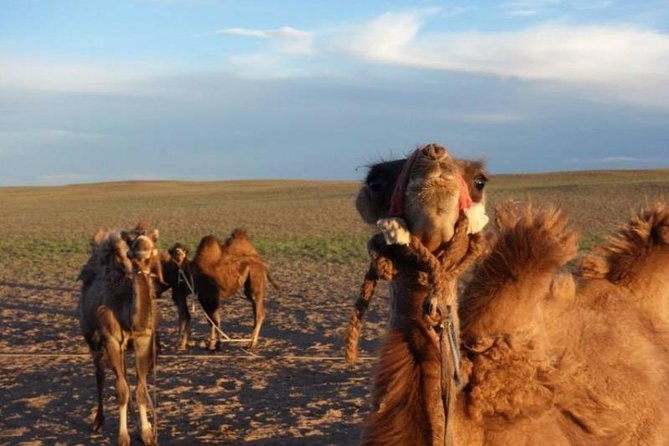
Your first full day sets the tone: big Mongolian past, then a modern museum highlight, all without rushing. At Baga Gazariin Chuluuu, you can expect a mix of natural and human-made traces. The stop includes Bolort Cave, rock images, petro glyphs, burial mounds, and even a ruin of a Choir monastery said to be established by Zaya Damdin. The listing also mentions an eye treatment spa, which is exactly the kind of odd, local detail that makes a stop feel more lived-in than staged.
After that, you head to Chinggis Khaan National Museum, where the focus is on scale and symbolism. It is specifically noted as featuring one of the biggest Chinggis Khaan statue in Mongolia, and the time block is 40 minutes with admission included. This is a straightforward, efficient stop that gives you a strong cultural frame before the tour shifts more deeply into desert ruins and monastery sites.
A practical note: day 1 is content-heavy. If you tend to get tired early, plan to keep your evening low-key, hydrate, and be ready for a full week. That is not a downside, just how the itinerary is designed.
Day 2: Tsagaan Suvarga, the White Stupa cliff with 10-million-year vibes
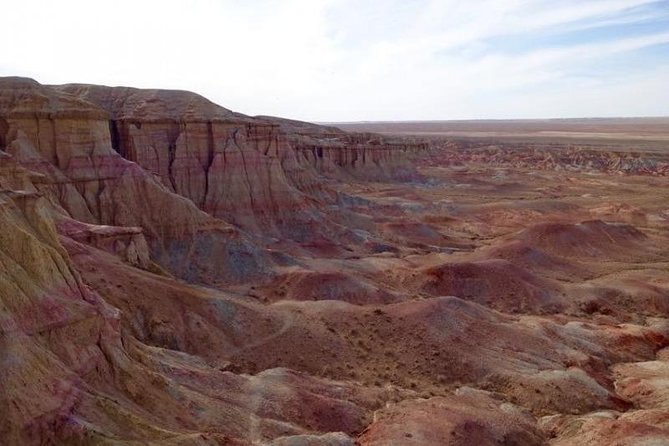
Day 2 goes straight for a geological icon: Tsagaan Suvarga, locally called the White Stupa. The cliff is described as impressive and legendary, and it is tied to erosion over a vast timespan. The key detail here is the claimed 10 million years history, and the idea that different periods are reflected in the cliff features.
This is the kind of stop where you benefit from a guide explanation. Even if you are not a geology person, it helps to understand what you are looking at and why locals gave it its name. The listing also notes that the cliff indicates different times by features that come from natural phenomenon, so you are not just looking at a pretty wall of rock.
The timing is listed as admission free, and the day is marked as a full-day block. Expect you will have time for photos and slow viewing, not a sprint. This is also a good day for comfortable layers, since open-air viewing can mean you feel temperature swings even when the day looks calm.
Day 3: Ongi Monastery ruins and a Middle Gobi drive with lunch at Bayanzag
Day 3 shifts from rock and cliffs into spiritual space, but in a grounded, real-world way. You start with lunch in Bayanzag, then drive toward a small village in the Middle Gobi province called Saikhan Ovoo. From there, you visit Ongi Monastery, also known as Ongi Monastery ruins.
What makes this stop interesting is the way it is described as an active small monastery with a temple component, not just a pile of stones. The ruins are framed as active, which can change how you experience it. Instead of feeling like you are looking at history behind glass, you are seeing something tied to daily life.
The day’s flow also suggests you get a feel for the Middle Gobi drive itself, because it is not presented as a short, single-stop outing. It is more like a transition day, with the monastery as the anchor.
Admission is listed as included, which is one of those small value boosters that adds up when you compare this kind of trip to DIY sightseeing with separate entry fees.
More multi-day Mongolia routes:
- 7-Days Central Mongolia Tour and Ancient city in Kharkhorin
★ 4.5 · 5 reviews - 4 Days Central Mongolia-Amazing experiece
★ 5.0 · 4 reviews
Day 4: Kharkhorin, the former capital on the Orkhon River
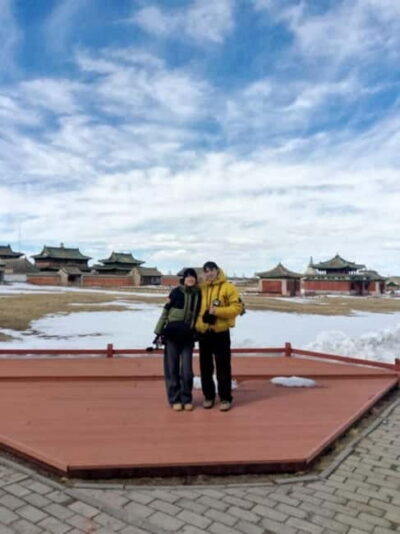
On Day 4 you go to Kharkhorin, also known as Kharakorum, and the setting is part of the story. It is described as the capital of the Great Mongol Empire in the 13th century, on the right bank of the Orkhon River. The distance from Ulaanbaatar is noted as 360 km southwest, which gives you a sense of how much of this week is about travel between eras and regions.
This stop matters because it is one of the clearest historical anchors in the route. You are not just chasing scenery. You are connecting the dots between what Chinggis Khaan is celebrated for, what the Mongol Empire achieved, and how that power shaped places across Mongolia.
Admission is listed as free here, so you get a major historical site without an extra ticket cost. That is good for value, and it also means more of your budget goes into the things you cannot easily replicate, like the lodging and the long-distance transport.
A realistic consideration: Kharkhorin is a classic “see it and learn it” destination. If you prefer light, low-information days, you may want to pace your attention during the drive and save your energy for the actual site time.
Day 5: Orkhon Waterfall, a simple nature break with exact size details
After a history-forward day, Day 5 gives you nature with a clear anchor: Orkhon Waterfall. The listing describes it as very close to the Orkhon and points out that it is on the Ulaan Tsutgalan River.
It also gives concrete measurements: the waterfall is noted as about ten meters wide and twenty meters high. That kind of specificity helps you set expectations. You can plan your time knowing it is not going to be hours of trekking. It is a focused nature stop that still feels worthwhile, especially after several days of forts, cliffs, and monastery sites.
Admission is listed as included, and the waterfall is presented as a popular destination for tourists. The good part of a popular stop is you tend to get a more straightforward visit flow. The caution is that you should still treat it as a moment to slow down and watch, not just a photo stop.
This day also helps balance the week physically. You get your legs moving a bit, you hear water, and you reset your brain for the dune days coming next.
Day 6: Elsen Tasarkhai sand dune and camel riding in a mountain-framed setting
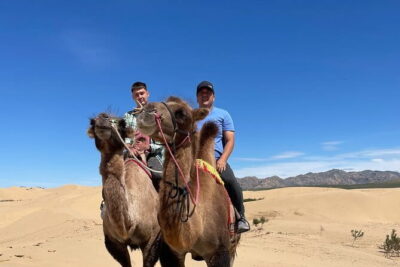
Day 6 brings you to Elsen Tasarkhai, the sand dune described as small and surrounded by a beautiful mountain area. The listing says it is famous for travelers getting a taste of the dune, and you also get camel riding here.
This is one of the biggest “experience” moments on the whole trip. The value is not just the thrill. It changes how you experience the Gobi. When you move slowly on a camel, you notice the terrain differently, you feel the rhythm of the area, and you stop thinking of dunes as background and start seeing them as a place you can travel across.
Even if you are comfortable with travel, do not treat camel time like a casual stroll. You are in a remote environment, and the whole point is to stay focused on your guide and follow instructions. The review feedback also supports that camel riding is a real part of the experience here.
This day is about the switch from “sightseeing Mongolia” to “living Mongolia,” even if only for a few hours.
Day 7: Morning at a local family stay, camel trekking, and a Hugnu Khan monastery
Your final day continues the dune theme and adds a local rhythm. You have a morning stay with a local family, and then you start camel trekking in the sand dune at Elsen Tasarkhai. The phrasing is important: trekking is more than a quick ride. It is time spent moving through the dune area, so your day is active and outdoors.
After that, you visit a monastery in Hugnu Khan National Park. Even with limited detail about which monastery, the key point is that your last stop connects you back to the spiritual side of Mongolia. Ending with a monastery in a national park setting makes the week feel more complete, because you have seen monastic ruins earlier and now you finish with another sacred stop.
Admission for the final day’s listed activities is included. That also means you reach the end without a “pay at the gate” surprise.
Where you sleep and what you eat: yurts, camps, and meals handled
This is not a hotel-only trip. Your accommodations are described as family yurts, tourist camps, or local ger hostels, depending on where you are along the route. That variation is part of the appeal, but it also means you should expect a range of comfort levels. The trade-off is a stronger sense of place.
Meals are a major part of the planning value here. The included meal list shows breakfast 6, lunch 7, and dinner 5, plus you get most meals covered. That reduces the mental load on a trip where you are constantly moving.
The reviews also point to meals feeling good and sometimes arranged in restaurants on parts of the route, which is a practical bonus. You do not have to be a wilderness chef to make the week work.
What is not included: snacks, fruit, alcoholic drinks, and personal items. So if you know you snack often, plan to bring small extras or budget for them, because the itinerary is set up around meals that are included, not snack fill-ins.
If you are sensitive to changing routines, you will likely enjoy this more if you keep your breakfast and dinner appetite steady. The week moves fast, even when the sightseeing does not.
The value of $1,500: what you are really paying for
At $1,500 per person for a 7-day private tour, the price can look high until you break down what is included. You are paying for round-trip transfers from Ulaanbaatar, accommodations, and most meals. Then you also get guided sightseeing with multiple admission stops, including Baga Gazariin Chuluu, the Chinggis Khaan National Museum, Ongi Monastery, Orkhon Waterfall, and Elsen Tasarkhai.
A DIY approach tends to fail in the same places: transport becomes complicated, lodging choices narrow as you go deeper into the route, and meal planning gets repetitive. This tour handles the big-ticket daily logistics so you can focus on the places themselves.
Also, the private structure means you are not squeezed into someone else’s schedule. That is value too, especially on long driving days. One review also praised the guide being fluent in English and Japanese, and that language comfort matters more than you might expect, because Mongolia trips often succeed or fail based on how well you understand what you are seeing.
The realistic trade-off is you have less control over timing than with a car rental. If you love total freedom, you might prefer independent travel. If you want your week to run without stress, this is priced like it is doing that job.
Who should book this Gobi and central Mongolia week
This tour is a strong fit if you want a guided, fully planned route that still feels authentic, with nights in yurts or local-style lodging. It is especially good for people who want a mix of nature moments and major cultural stops, without spending days figuring out transportation between remote areas.
It also works well for solo travelers. One review specifically highlighted that a solo traveler had a good experience on week trips like this and found the week to be full of surprises. The private setup helps here because you are not trying to join a chaotic group at every step.
If you do not enjoy being outdoors, or if you hate long drives, you might find this less comfortable. This route leans into being active in layers. The tour notes suggest a sporty dress approach with layers, which is exactly what you want for a week where some moments are open-air and some are in tents or camps.
Quick on-the-ground tips to make it easier
Do not overpack for comfort, pack for changing conditions. The tour context and past feedback point toward layers and sporty clothing. Think about footwear that works for walking around monuments and ruins, plus practical layers for camel and dune time.
Because snacks and fruit are not included, plan for quick energy needs on the go. If you get hungry between a lunch inclusion and a later dinner, you will appreciate having your own backup.
Finally, check the weather expectations before you count on dune and outdoor moments. The experience has a good-weather requirement, so build flexibility into your trip mindset even if you are not changing dates.
Should you book this Central Mongolia and Great Gobi tour?
If your dream is a week that actually connects Mongolia’s stories, caves, monastic sites, and dunes, this is a very practical way to do it. The biggest reasons to book are the private guide comfort (English and Japanese), the mix of cultural stops and outdoor time, and the fact that most meals and lodging are handled for you.
I would book it if you want less planning and more doing. I would hesitate if you need a perfectly hotel-style level of comfort every night, or if you cannot handle the idea that weather could change the schedule.
If you time it right and pack smart, this kind of route can give you a strong snapshot of central Mongolia and the Great Gobi without feeling like you are racing through it.
FAQ
What time does the tour start?
The tour starts at 8:30 am.
Where does the tour meet in Ulaanbaatar?
The meeting point is Danista Nomads, Orkhon Street 1-37, BGD-16 khoroo, Ulaanbaatar 16040, Mongolia.
Is pickup offered?
Yes, pickup is offered.
Is this tour private?
Yes. It is a private tour/activity, and only your group will participate.
How long is the tour?
The duration is listed as 7 days (approx.).
What is included with the price?
Included items are accommodations and round-trip transfers from Ulaanbaatar, plus meals (breakfast 6, lunch 7, dinner 5) and several admission tickets. Camel riding is included on the dune days.
What meals are included?
Breakfast is included 6 times, lunch 7 times, and dinner 5 times. Snacks and fruit are not included.
What sightseeing stops are part of the experience?
The route includes Baga Gazariin Chuluu, Chinggis Khaan National Museum, Tsagaan Suvarga (White Stupa), Ongi Monastery, Kharkhorin (Kharakorum), Orkhon Waterfall, Elsen Tasarkhai sand dune (with camel riding and camel trekking), and a monastery in Hugnu Khan National Park. Ugii Lake and Hustai National Park are also part of the overall route.
What is not included?
Not included are personal items, optional activity costs, alcoholic drinks, travel insurance, service tip, fruit, snacks, and use of bicycle.
What if the weather is poor?
This experience requires good weather. If it is canceled due to poor weather, you will be offered a different date or a full refund.
More 7-Day Experiences in Ulaanbaatar
- Gobi tour Mongolia 7 Days
★ 5.0 · 8 reviews - 7 days Great Gobi Tour
★ 5.0 · 4 reviews
Latest reviews from Ulaanbaatar
- A Day Aglag Buteel Temple★ 4.5 · 3 reviews
- Nomad Family Home Stay in Arkhangai Province★ 5.0 · 3 reviews
- Private – Ulaanbaatar City Tour★ 3.5 · 3 reviews
- Transfer service to Terelj national park★ 5.0 · 3 reviews
- Private Tandem Paragliding Experience at Bayanzurkh Mountain★ 5.0 · 3 reviews
- Essence of Mongolia 5 Days★ 5.0 · 3 reviews
- A Day Authentic Mongolian Trip near Ulaanbaatar all-inclusive★ 5.0 · 3 reviews
- Private and Guided City Tour in Mongolia★ 4.5 · 3 reviews
Gobi Desert Tours, compared.
Semi-Gobi and Kharkhorum overnight private trip
Read our review →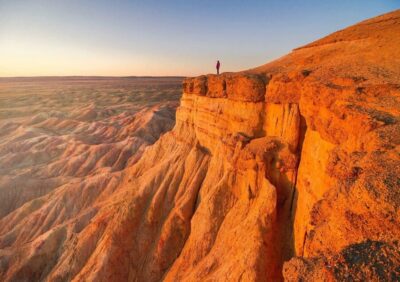
Travel to Gobi by train Visit World energy Center
Read our review →
Browse the lists this tour appears in