
Reviewed · GOBI DESERT TOURS
8 Days Tour: Gobi Desert And Kharkhorin
This 8-day journey across the Gobi Desert and into Kharkhorin feels special because you are not just sightseeing. You are driving between places shaped by time, wind, and geology, then ending the trip at one of Mongolia’s big historic spiritual centers.
I like two things a lot. First, the itinerary packs in major natural sites, like Tsagaan Suvarga White Stupas with fossil seashell cliffs, and the sand dunes of Khongor Els where you can stretch your legs and take photos. Second, the small group setup, no more than 10 people, makes the drive and stops feel more personal, not like you are herded through.
One thing to think about up front: this is a weather-dependent desert itinerary. If conditions are rough, plans may shift, and you will still want to be comfortable with long driving days and simple overnight stays in family yurts or tourist camps.
Key Points to Know Before You Go
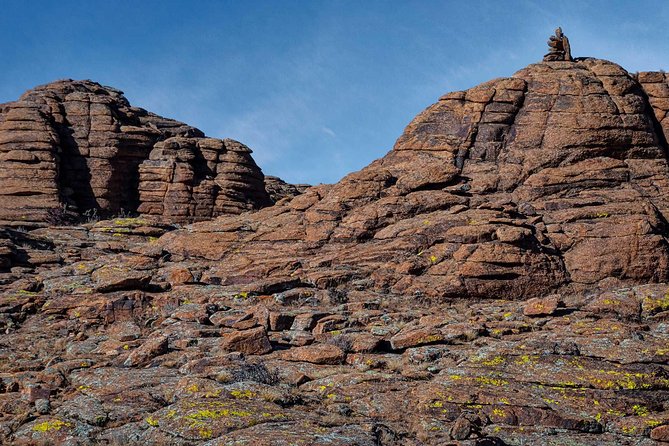
- Tsagaan Suvarga White Stupas: 62-meter cliffs, 400 meters wide, carved by wind, with fossil seashells from when it was a sea bottom
- Yoliin Am (Ice Canyon): a narrow gorge in the Zuun Saikhan Mountains, protected since 1965 and strictly protected today
- Khongor Els Sand Dunes: 180 km long, with dunes around 15 to 20 meters tall in the Sevree and Zuulen mountain areas
- Bayanzag and the Flaming Cliffs area: famous for Cretaceous dinosaur finds, including eggs and hatchlings, first highlighted by Roy Chapman Andrews in 1922
- Ongi Monastery on the Ongi River: established in the 1760s, still active today though with only a few monks performing functions
- Kharakhorum ruins and Erdenezuu: UNESCO World Heritage Site context plus tombs and a real Buddhist temple in the monastery complex
Why This 8-Day Gobi and Kharkhorin Trip Works
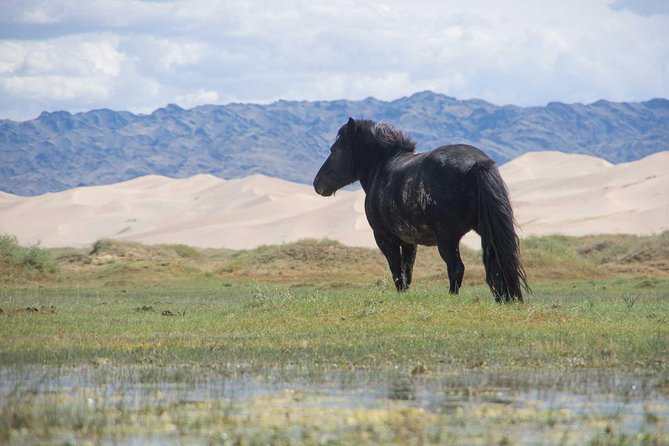
If you like your Mongolia trip with real variety, this route hits the sweet spot. You start with granite and temple ruins, move through cliff formations and ice canyon walls, then shift to sand dunes and fossil-famous badlands. After all that desert energy, you land in Kharkhorin, where you can wrap your head around Mongol Empire history at Kharakhorum’s protected ruins and at Erdenezuu monastery.
This is also the kind of tour where small-group travel helps. With no more than 10 people, you tend to get quicker stop-and-go communication. You are not stuck waiting behind a giant bus line to take one photo. You can focus on walking the short routes, looking closely at geology, and getting the timing right for light.
Finally, the tour includes most meals and lodging in family yurts or tourist camps. That matters in the Gobi, where buying food on the fly can be hit or miss. It lets you spend your effort on the sights, not on constantly checking logistics.
More Gobi Desert expeditions:
- Ulaanbaatar: Semi-Gobi Desert Day Trip & Camel Ride
★ 4.0 · 92 reviews - From Ulaanbaatar: Semi Gobi, Nomads, Ancient Kharkhorin Tour
★ 4.6 · 84 reviews - 1 Day Semi-Gobi All-included tour
★ 4.0 · 69 reviews
Price and Logistics: What $1,693 Buys You
At $1,693 per person for 8 days, the price is not low, but it is also not just paying for driving. Your money is covering:
- Round-trip transfers from Ulaanbaatar
- A guided small-group experience (up to 10 people)
- Accommodations in family yurts or tourist camps
- Meals: 7 breakfasts, 8 lunches, and 7 dinners
- A set of major stops, including UNESCO World Heritage context at the end
Alcoholic drinks are not included, so if you like a beer with dinner, you will want to budget separately.
For me, the value comes down to how much is handled for you. You get fed, you get a place to sleep, and the route threads together multiple high-impact sites without you needing to coordinate every turn of the road yourself. In the Gobi, that is a real advantage.
Starting in Ulaanbaatar, Then Letting the Day Begin at 7:30
The tour starts at 7:30 am. That early start is typical for big desert days, where daylight matters and driving time adds up fast.
Plan to be ready at the meeting point early, since you want to get settled and not waste time. You can also expect pickup and round-trip transfers, since the tour is built around transportation in and out of Ulaanbaatar.
And yes, it is a private setup, meaning it is only your group participating. In a region this remote, that private feel helps a lot, because the guide can pace the day around the group.
Day 1 in the Granite Zone: Baga Gazariin Chuluu
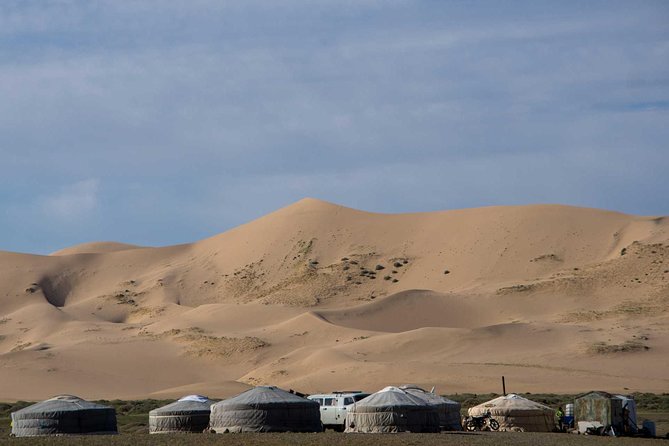
Day 1 takes you to Baga Gazariin Chuluu, a local protected area with a granite mountain rising to 1,751 meters. This is one of those spots that works well as an opening day. You ease into the trip with scenery plus small, interesting stops.
What you can look for here includes:
- A Buddhist temple ruin used by monks
- A stone hole with spring water for the eyes
- A small cave
This is not a place where you need to rush. It is more about walking, noticing details, and getting your bearings for how “small place, big feeling” Mongolia can be.
More days out of Ulaanbaatar to weigh
- From Ulaanbaatar: Genghis Khan Statue NationalPark CamelRide
★ 4.8 · 353 reviews - Genghis Khan Statue Day Tour+National Park+Camel Ride+Eagle
★ 4.5 · 261 reviews - From Ulaanbaatar: Central Mongolia Guided 3-Day Tour
★ 4.6 · 186 reviews - Ulaanbaatar: Small Group 3-Day Best of Central Mongolia Tour
★ 4.1 · 171 reviews
Day 2: Tsagaan Suvarga White Stupas and Fossil Seashell Cliffs
Day 2 is one of the headline stops: Tsagaan Suvarga, also called the White Stupas. From a distance, it can look like ruins of an ancient town or a cluster of white stupas, but up close it is all about wind-carved geology.
Key details to appreciate:
- The cliff is 62 meters high and about 400 meters wide
- Over massive time, wind has sculpted it into the forms you see
- Tsagaan Suvarga was once a sea bottom, and the eroded cliffs are rich in fossil seashells
I love this stop because it teaches you to read the land. You are not just seeing something pretty. You are seeing clues to a whole older world.
Practical note: bring layers for the drive and for being outside on the cliff area. Even when skies are clear, the temperature in desert regions can shift quickly.
Day 3: Yoliin Am, the Ice Canyon in the Zuun Saikhan Mountains
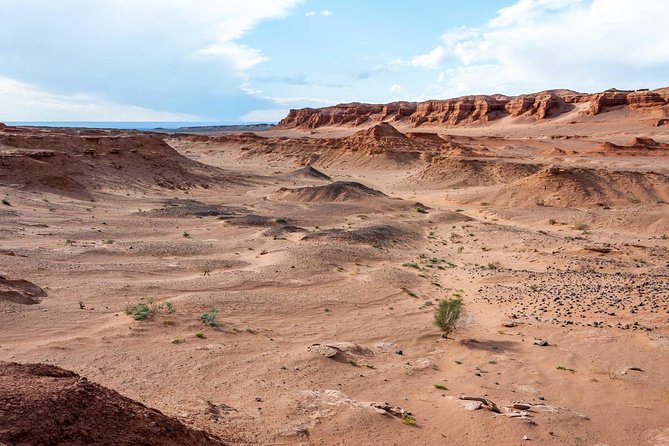
Day 3 goes to Yoliin Am, described as a narrow ice canyon where a river flows through the Zuun Saikhan Mountains. The mountains there sit at around 2,815 meters sea level, and the gorge walls can reach about 200 meters high in the central part.
Important context: the area has been protected since 1965, and it is today one of Mongolia’s strictly protected areas. That means you should treat it like a “respect the place” stop. Stay on the intended paths, keep voices down, and avoid doing anything that could damage fragile surroundings.
Why it is worth it: you go from cliff formations into a cooler-feeling gorge setting, which helps break up the trip and makes the different ecosystems feel real.
Day 4: Khongor Els Sand Dunes, 180 km of Texture and Light
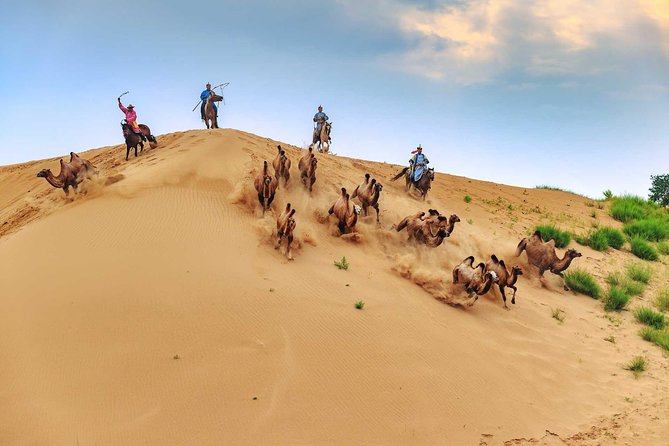
Day 4 is for the sand, Khongor Els Sand Dunes. The dunes are described as extraordinary in scale: 180 km in length and 15 to 20 meters tall, sitting on the northern side of the Sevree and Zuulen mountain areas.
What makes this stop fun is the mix of space and texture. With that kind of dune length, you are not trapped in a tiny photo corner. You can walk, climb where permitted, and take photos with changing angles as the sun moves.
This also sits in the broader desert zone that makes up around 3% of Mongolia’s territory, so you are getting an outsized taste of the country’s extremes.
If you are prone to sand in your eyes, plan to protect yourself. A hat and sunglasses help, and it is a good idea to keep dust exposure in mind.
Day 5: Bayanzag and the Flaming Cliffs Connection
Day 5 heads to Bayanzag, near the center of Bulgan Soum. This is internationally known for dinosaur fossils. The discovery includes more than bones, including complete skeletons, eggs, and hatchlings from the Cretaceous Period.
The tour description calls out dinosaur groups like:
- Protoceratops
- Oviraptor
- Pinacosaurus, the heavily armored type
Bayanzag is also tied to the name Flaming Cliffs. Those cliffs were highlighted by explorer Roy Chapman Andrews, who visited Mongolia in 1922.
Why you should care, even if dinosaurs are not your main obsession: this stop is a reminder that the Gobi is not just “today’s desert.” It is a place with evidence stretching back tens of millions of years. You look at the same earth that preserves those fossils and realize how much time you are standing on.
Day 6: Ongyn Temple and Monastery Life on the Ongi River
Day 6 slows the pace a bit and adds a spiritual anchor with Ongi Monastery, also called Ongyn temple. The monastery was established in the 1760s by Bari Yonzon Khamba along the Ongi River.
Here is what makes this more than a photo stop:
- In its time, the monastery had over 1,000 monks
- It included a complex of around 30 temples
- It is still active today, but now only a few monks perform its functions
The itinerary notes activities like hiking and photo shooting, plus time to explore the natural wonder area and get up to nearby cliffs. This day is where you can feel the balance of Mongolia, desert vastness plus human devotion carved into harsh terrain.
Practical tip: monastery sites often have customs. Dress modestly, move respectfully, and follow your guide’s cues.
Day 7: Kharkhorin, Kharakhorum Ruins, Erdenezuu, and the Mongol Empire Wall
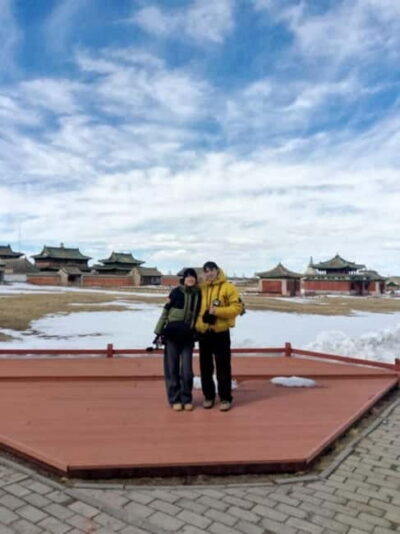
Day 7 is your major history day, centered on Kharakhorum, known in modern terms as Kharkhorin. The city was established in 1220 and served as the capital of the Great Mongolian Empire.
The story is dramatic:
- Chinggis Khaan lived here
- His descendants, including Khaan Ugudei, Guyug, and Munkh, also lived here and ruled
- Soldiers of the Chinese Ming Dynasty destroyed the town in the 14th century
The ruins have been protected since 1961 and were named a UNESCO World Heritage Site in 1996. That kind of official protection matters because it keeps the area from turning into random relic hunting.
Once you arrive, you visit:
- Erdenezuu Monastery, including tombs, a temple, and a real Buddhist temple
- The Wall of the Mongolian Empire area, so you can learn about the fortification side of the story
This is also where that small-group feel helps again. With fewer people, it is easier to hear explanations and focus on how the ruins connect to what your eyes see on the ground.
Day 8: Back to Ulaanbaatar, Plus Cashmere Stops at Goyo and Gobi
On Day 8, you return to Ulaanbaatar. The day also includes shopping at cashmere factory stores of Goyo and Gobi, two famous Mongolian cashmere brands.
This stop can be useful if you want a practical souvenir that actually fits real life. Mongolia is known for wool, and cashmere is one of the country’s simplest exports to buy and use.
One caution: if you dislike shopping detours, treat this as a tradeoff day. You will still get back to the city, but you are also giving time to factory store browsing.
Family Yurts and Tourist Camps: What to Expect Sleeping Out in the Gobi
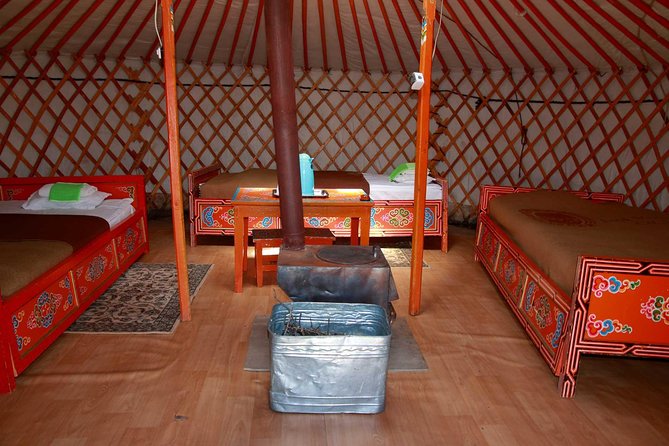
The tour uses family yurts or tourist camps for overnight stays. That means you should expect basic, simple accommodations rather than hotel-level comfort.
The good news is that this style of lodging helps make the desert feel close to people’s real routines, not staged for you. The tour also includes meals, which helps you relax into the rhythm of “drive, explore, eat, rest.”
Still, pack and plan like you are camping in a harsh environment. Bring layers for temperature changes. If you have sensitivities to dust or rougher bedding, you may want to prepare accordingly before you go.
Who This Tour Fits Best
This is a great fit if you want:
- A focused 8-day route through the Gobi’s top natural sites and major cultural stops
- A small-group approach where your guide can keep things running smoothly
- Most meals included, so you do not have to constantly manage food and logistics
- A mix of geology, wildlife-adjacent fossil fame, desert dunes, and monastery history
It is also a smart choice if you value guidance on what you see. In places like Tsagaan Suvarga and Yoliin Am, context turns a view into an understanding.
If you are someone who hates long driving days, or you need high-comfort lodging every night, this may feel a bit rough around the edges.
A Note on Guides and Organization, Based on Real Feedback
The trip’s reviews give you a clear signal about quality and follow-through. One recent review highlighted Enza Tours for organization, and praised both the tour guide and the driver. The response was signed by Enkhzaya Ganbold, which suggests the operator keeps personal contact and takes feedback seriously.
That is exactly what you want on a remote desert route: not just a nice itinerary, but calm competence when the day changes.
Should You Book This Gobi Desert and Kharkhorin Tour?
I would book it if you want an 8-day Mongolia itinerary that mixes big geological sights with real monastery and empire history, and you want those experiences supported by included meals and small-group guiding.
I would think twice if:
- You need hotel comfort every night
- You dislike weather-dependent plans, since the tour requires good conditions and may offer a different date or a full refund if it is canceled due to poor weather
- You do not want any shopping time on the last day
Overall, this is a strong value for people who like to see more than one side of the Gobi in a single trip. You get the cliffs, the canyon ice walls, the dunes, fossil-famous grounds, and a serious historic finish in Kharkhorin.
FAQ
How long is the Gobi Desert and Kharkhorin tour?
It runs for 8 days (approx.).
What is the price per person?
The price is $1,693.00 per person.
What group size should I expect?
It is a small group of no more than 10 people, and it is also private, meaning only your group participates.
Where does the tour start and how does transportation work?
It is based in Ulaanbaatar, with round-trip transfers from Ulaanbaatar and pickup offered. The start time is 7:30 am.
What meals are included?
The tour includes breakfast (7), lunch (8), and dinner (7).
Are alcoholic drinks included?
No, alcoholic drinks are not included.
What kind of accommodation is provided?
You stay in family yurts or tourist camps along the way.
What are some of the main sights on the route?
You visit Tsagaan Suvarga White Stupas, Yoliin Am, Khongor Els Sand Dunes, the Flaming Cliffs area via Bayanzag, Ongi Monastery, and Kharakhorum (Kharkhorin) including Erdenezuu monastery and the Mongolian Empire Wall.
What happens if the weather is bad?
The experience requires good weather. If it is canceled due to poor weather, you will be offered a different date or a full refund.
When can I cancel for a full refund?
You can cancel up to 6 days in advance of the experience for a full refund. Cut-off times are based on the local time of the experience.
Latest reviews from Ulaanbaatar
- A Day Aglag Buteel Temple★ 4.5 · 3 reviews
- Nomad Family Home Stay in Arkhangai Province★ 5.0 · 3 reviews
- Private – Ulaanbaatar City Tour★ 3.5 · 3 reviews
- Transfer service to Terelj national park★ 5.0 · 3 reviews
- Private Tandem Paragliding Experience at Bayanzurkh Mountain★ 5.0 · 3 reviews
- Essence of Mongolia 5 Days★ 5.0 · 3 reviews
- A Day Authentic Mongolian Trip near Ulaanbaatar all-inclusive★ 5.0 · 3 reviews
- Private and Guided City Tour in Mongolia★ 4.5 · 3 reviews
Gobi Desert Tours, compared.
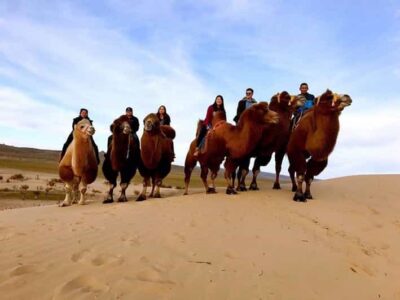
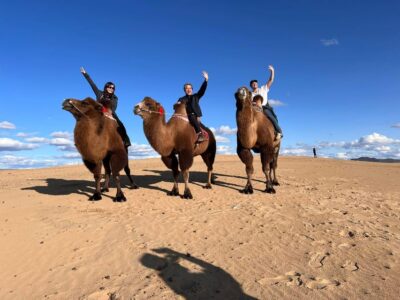
Semi-Gobi and Kharkhorum overnight private trip
Read our review →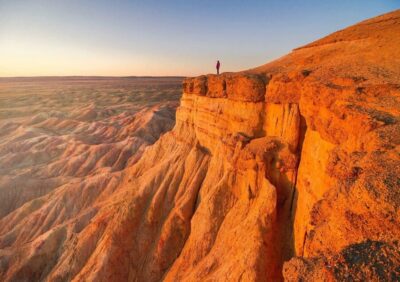
Travel to Gobi by train Visit World energy Center
Read our review →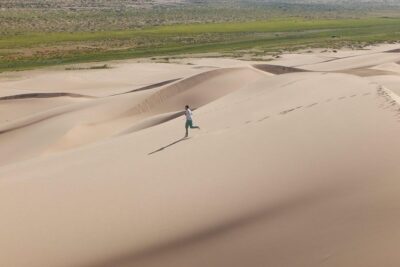
1 Day Semi-Gobi Tour with Lunch And Enjoying Camel or Horseback
Read our review →Browse the lists this tour appears in