
Reviewed · 4-DAY EXPERIENCES
Ulaanbaatar: 4-Day Central Mongolia Winter Tour
This is a winter-focused Central Mongolia route that strings together sand dunes, hot springs, and frozen lake time in just 4 days. I love the two-hump camel ride in winter conditions, and I also like the chance to sleep with a local ger guest family, not just in a generic hotel. One drawback to plan for: you’ll be outdoors and on winter roads a lot, so you need serious warm layers and a mindset for cold, bumpy travel.
The other big reason this trip works in winter is the payoff after the cold, especially at Tsenkher Hot Springs. I like that the day-to-day rhythm mixes guided sights with real recovery time in an outdoor hot pool. The consideration is simple: because the hot springs are outdoors, your comfort depends on how well you dress for freezing air, not just on the hot water.
Key Things You’ll Want to Know Before You Go
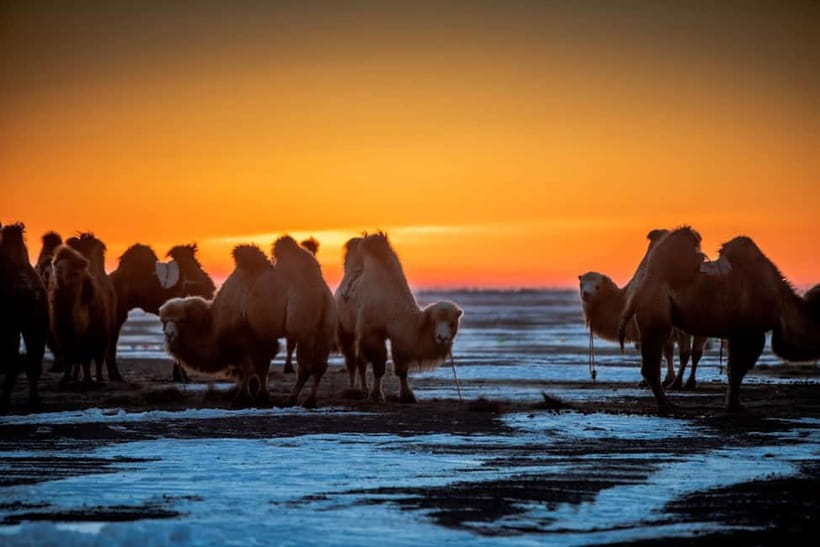
- Two-hump camel riding in winter: plan for a gentle, slow ride plus time on foot in dune country
- Tsenkher hot spring specifics: year-round flow from the ground at about 85 Celsius, and it’s described as the second hottest in Mongolia
- Ugii Lake in winter: a guided visit to a major central lake that freezes and is used for ice fishing when conditions allow
- Ger nights with different styles: a local ger guest family night, then a tourist camp with an open hot springs pool, then a local ger camp
- English-language guiding (plus options): English speaking guide available, with other languages listed too, and one review praised Taisun’s clear explanations
- Value that’s more than sightseeing: meals, entrances, daily bottled water, camping equipment, and the camel are included in the base price
A Winter Route That Feels Like Mongolia, Not a Checklist
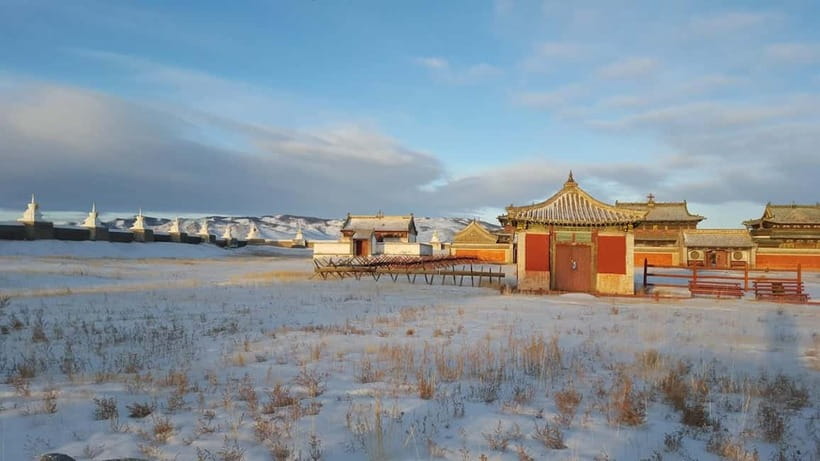
Ulaanbaatar is the start, but the real story happens far outside the city. This tour is built around three very different winter scenes in Central Mongolia: wind-shaped sand dunes, a hot-spring stop with year-round geothermal water, and Ugii Lake once it’s iced over.
What I like about this setup is that it doesn’t treat winter as a hardship you endure until it’s over. It treats winter as part of the experience. You’ll ride camels through dune country, walk and hike around the Elsen Tasarkhai sand area, then warm up for real at Tsenkher. Then you head to Ugii Lake, where winter ice changes how the whole area feels.
That’s also why the “budget” side matters. This tour price is not just paying for a driver and a guide. It’s paying for lodging in ger-style accommodations, meals as listed in the itinerary, and the practical pieces that make remote winter travel work, like camping equipment and daily bottled water.
Planning around Ulaanbaatar? A few more to line up:
- From Ulaanbaatar: Genghis Khan Statue NationalPark CamelRide
★ 4.8 · 353 reviews - Genghis Khan Statue Day Tour+National Park+Camel Ride+Eagle
★ 4.5 · 261 reviews - From Ulaanbaatar: Central Mongolia Guided 3-Day Tour
★ 4.6 · 186 reviews
Day 1: Elsen Tasarkhai Dunes, Khogn Khan Area, and a Camel Plus Nomad Home Night
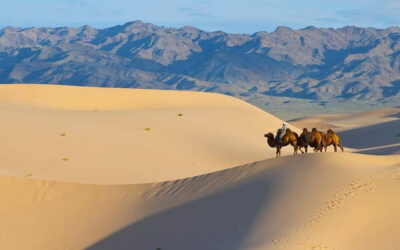
Elsen Tasarkhai is the kind of place where winter makes everything quieter. You’re dealing with sand dunes that are part of the larger Mongolian Sand Dunes system, stretching roughly west from Tuv, Övörkhangai, and Bulgan aimags, and associated with the Khogn Khan Range. The dunes run about 80 km long, and they’re described as roughly 280 km west of Ulaanbaatar and about 80 km east of Kharkhorum. In other words, you’re not just taking a short drive out for scenery. You’re heading into real Central Mongolia.
This day also connects the dunes to something more grounded than just sand. To the north is the Khogn Khan area, described as rocky and wooded mountains, and the region is protected as a national park since 2003. The area includes historical sites such as the Old Temple and Erdene Khamby Temple, plus granite mountains. So yes, you’ll have wide-open dune views, but you’ll also get a guided framework for what you’re seeing.
The heart of Day 1 for most people is the nomadic evening and the camel time. You’ll experience the lifestyle of a nomadic family in a traditional Mongolian home, then enjoy about an hour ride on a camel. There’s also walking and hiking time, guided through the winter nature around you.
Practical reality check: camel riding in winter is memorable, but it’s also physical. You’ll be moving slowly, and you’ll want warm gloves and layers that don’t shift or expose skin. The ride is not the kind of thing you can fake with light clothing, because the cold is part of how the day feels.
When the day ends, you sleep in a local ger guest family setting. That kind of overnight is often where the trip goes from “tour” to “place.” You’re in a simple traditional setup, and the value comes from sharing time with the rhythms of a local household rather than checking into a standardized room.
Day 2: Kharkhorin, Karakorum Origins, and the Year-Round Tsenkher Hot Springs
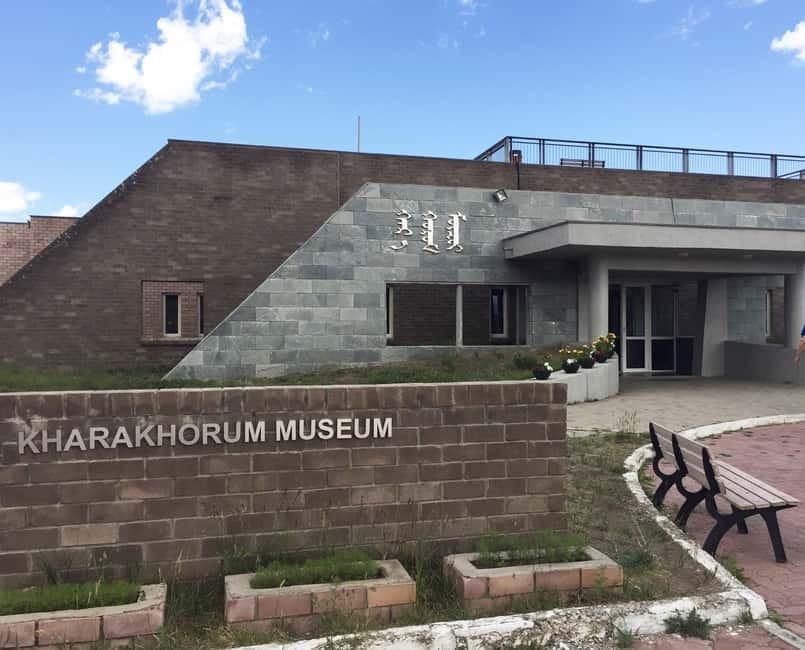
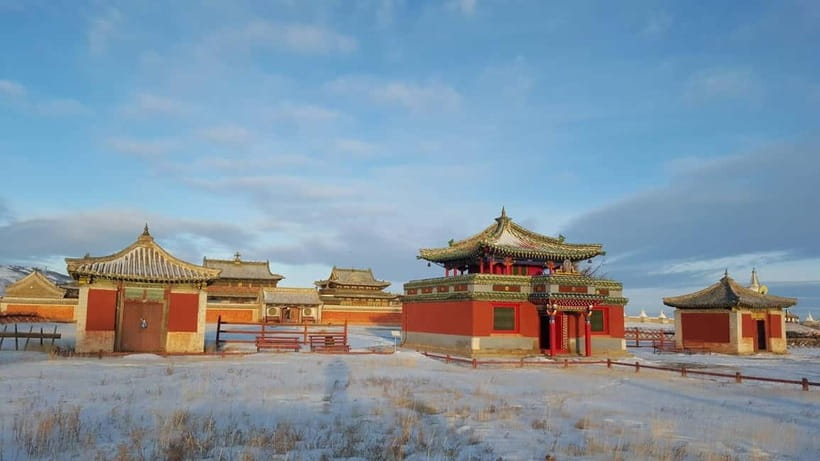
Day 2 is a history stop plus a major comfort stop. You’ll pass through Kharkhorin, also spelled Kharkhorum in the itinerary description. This area is tied to Karakorum, which served as the 13th-century capital of the Great Mongol Empire. Karakorum was destroyed in 1380, and later the site saw the rise of Avtai Khan’s yurt, described as connected to the founding of the Erdene Zuu Monastery.
Even if you don’t memorize dates, this is the kind of place where the guide can help you see layers in the terrain and buildings. You’re not just photographing ruins. You’re being walked through how this region fits into the wider Mongol story, and that makes the day feel more meaningful than a quick stop.
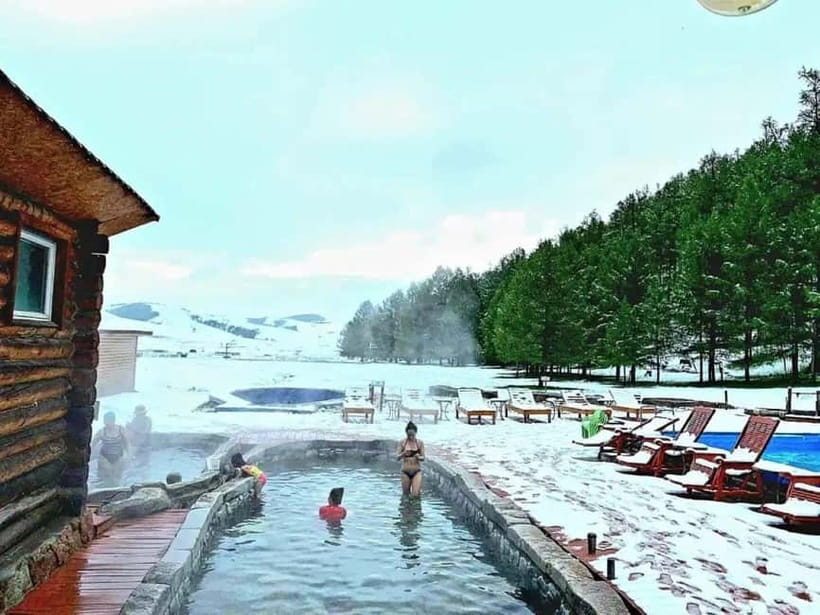
Then you pivot to the reason many people book this tour: Tsenkher Hot Springs. The itinerary describes Tsenkher as a natural hot spring flowing year-round from the ground at about 85 Celsius. It’s also described as the second hottest spring in Mongolia. That matters because it explains why the stop is more than a “look at the steam” moment. It’s meant to help you recover.
In winter, an outdoor hot pool works differently than indoor soaking. The warmth hits your muscles, but the cold air still frames the experience. You’ll likely feel the full contrast, which is exactly why hot springs like this are so popular in Mongolian winter travel.
Overnight tonight is at a tourist camp with an open hot springs pool. That means you don’t have to go hunting for warmth after dinner. You’re already set up for the recovery routine.
One more detail I appreciate: the pace is structured but not rushed. A good winter tour has to protect your energy. If you start Day 2 history sightseeing and then immediately run off again without time to thaw, you end up cranky and stiff. This one builds the warm-water payoff into the schedule.
Day 3: Ugii Lake in Winter Ice Time and Another Chance to Read the Terrain
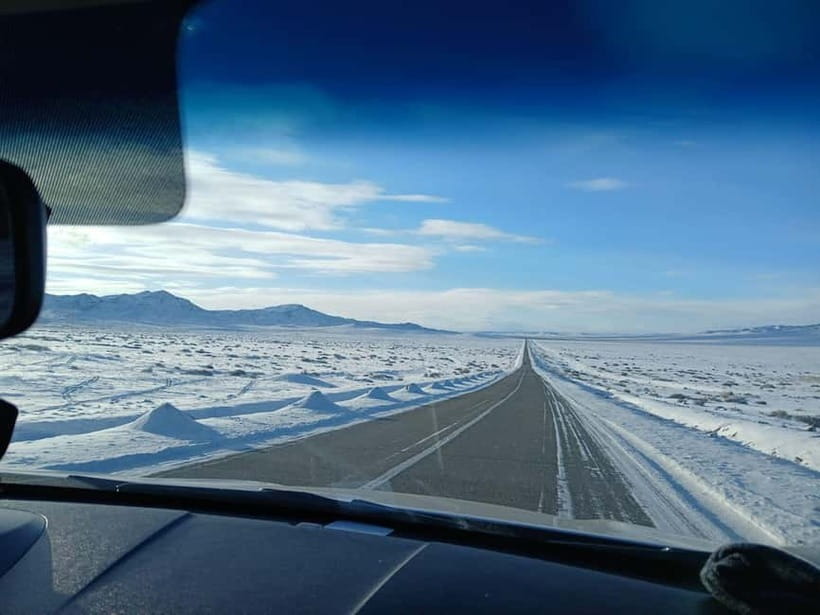
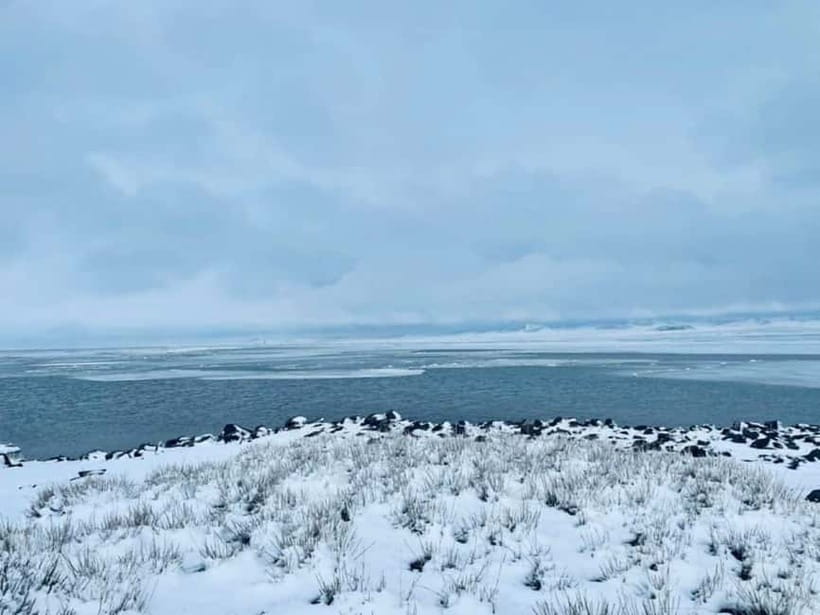
Ugii Lake sits in the center of Mongolia in Arkhangai Province. It’s one of Mongolia’s larger lakes, with the itinerary listing a surface area of about 27 square kilometers. The average depth is given as 6.64 meters, with some sections reaching up to 15.3 meters, and a shoreline length of about 23.5 km.
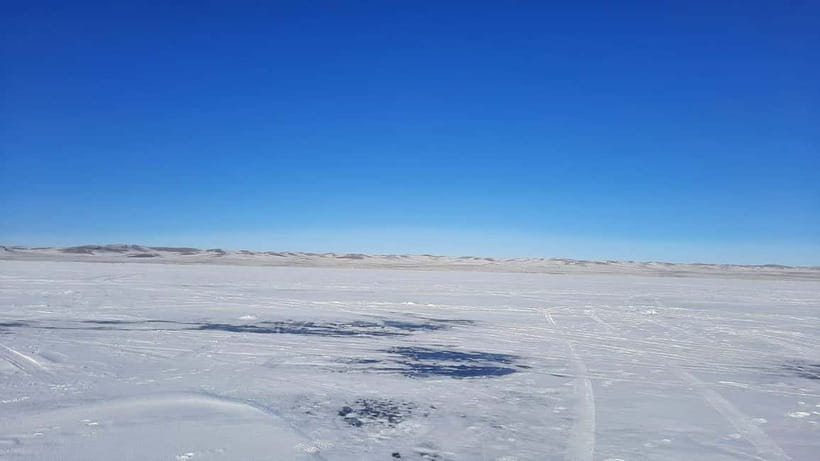
In winter, the defining feature is the ice. The itinerary notes that Ugii Lake freezes and can be used for ice fishing when holes are opened during the fishing season. Even if you do not fish, the ice changes the whole way you experience the area. You’re dealing with a different kind of scale, reflections off snow and ice, and a more silent version of water country.
This is also the day that gives you the tour’s third signature moment: “another opportunity to travel over a glacial lake,” according to the overall highlights. The exact way that’s done can depend on conditions, but the plan is clearly built around experiencing the frozen lake environment as part of your route, not just standing near it.
Tonight you sleep in a local ger camp. Like the Day 1 guest home night, this keeps you in the rhythms of a simple Mongolian shelter. The difference is that by Day 3, you’ve probably already learned what matters most: how to manage layers, how to keep gear organized, and how to avoid doing anything that makes you feel underprepared.
More days out of Ulaanbaatar to weigh
- 4 Day Best of Central Mongolia tour, Chinggis Khan statue
★ 4.8 · 21 reviews - 4 Days Tour: Central Mongolia
★ 5.0 · 13 reviews - 4 Days-The Best of Mongolia Collection tour
★ 5.0 · 8 reviews - Bus tour to visit Gobi 4 day
★ 4.9 · 7 reviews
Day 4: Back to Ulaanbaatar and What You Bring Home Besides Photos
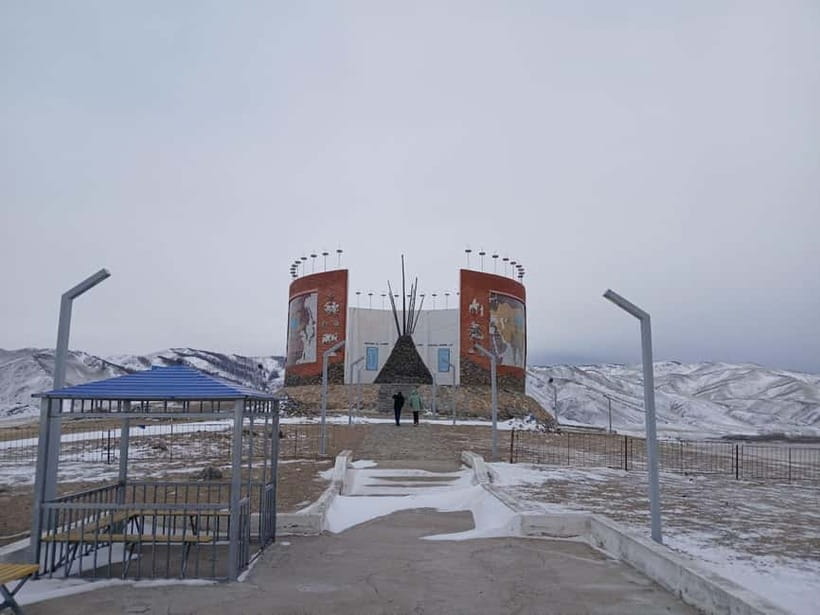
On Day 4, you drive back to Ulaanbaatar. This is the day that reminds you that winter travel is not just scenery. It’s logistics and timing. Even though the program calls it a “drive back,” you’ll still want to treat it as part of the trip rather than a passive transfer.
This is when I recommend you re-check your camera batteries, your warm layers, and any small items you didn’t use much earlier. In Mongolian winter, simple things like cold draining a battery can matter.
When you arrive, you’ve done a rare combo in one package: dunes that run for tens of kilometers, a hot spring with year-round geothermal water at around 85 Celsius, and a central lake scene defined by ice. That mix is hard to assemble independently unless you’re already comfortable with winter driving and remote accommodations.
Driving, Group Size, and Comfort in Winter Mongolia
This tour runs as a private group, and that affects how the day feels. A private group means you’re not stuck with a schedule built around random pacing from strangers. It also helps with winter flexibility, because winter plans often depend on how everyone is doing physically, how warming breaks work, and how weather behaves.
You’ll have a driver plus vehicle plus petrol, so you’re not relying on public transport for remote legs. And there’s an English speaking guide on the trip, with multiple other languages listed (Japanese, Korean, Russian, Chinese). In one account from a past guest, the guide name was Taisun, and they specifically praised both the driver’s skill and the guide’s clear, sensitive explanations.
One more comfort note that’s worth taking seriously: the tour instruction explicitly asks you to prepare warm clothes for comfort at the destination and during activities. That’s not marketing fluff. In a tour like this, your comfort is your success. If you stay warm, you walk and ride more confidently. If you don’t, you’ll spend the day focusing on being cold instead of paying attention to the dunes, hot springs, and ice.
Price and Value: Why $931 Can Make Sense Here
At $931 per person for a 4-day winter experience, the price looks steep at first glance, especially if you’re comparing it to city tours. But you’re not buying “a guide and a bus.” You’re buying a fully assembled remote winter itinerary.
Here’s what’s included that changes the math:
- Accommodation during the trip, including ger-style nights
- Driver, vehicle, and petrol
- English speaking guide
- All meals as displayed in the itinerary
- Entrance fees for national parks and museums
- Bottled pure water every day
- Camping equipment
- Camel
- Visa support and invitation letter if needed
What’s not included is also clear: international or domestic airfare, personal items, optional activities, alcoholic drinks and snacks, and travel insurance.
So the value angle is: you’re paying for the friction removal. Remote winter travel costs money and time, and most of that cost shows up in transport, gear, and lodging. This tour bundles those pieces, plus it includes the signature camel ride and the major hot springs stop.
If your alternative is arranging everything yourself, you’d need to solve winter logistics, remote driving, ger lodging, guiding, and park fees. Even if you find cheaper components, the overall effort and risk usually cancels out the savings.
What to Bring for a Winter Camel, a Hot Spring, and an Icy Lake
The tour data is simple on packing, but winter requires you to think beyond the one-item list.
Bring a camera, yes, because the dunes and ice are photo-friendly in a cold, clean way. But also bring your warm-layer system, gloves that work for your hands, and socks you trust. The program explicitly advises warm clothes for comfort at the destination and activity.
Also remember that hot springs days create a rinse-and-dry routine. If you plan to soak, pack something you’re comfortable using before you get back on the vehicle. Drying takes longer in winter, so you don’t want to rely on luck.
Finally, note the rules: alcohol and drugs are not allowed. If you’re tempted to treat a hot springs stop like a party, you’ll want to rethink that plan.
Who This Tour Suits Best (and Who Might Want to Skip)
This tour fits best if you:
- Want a true winter itinerary, not just a short walk and then back to warmth
- Like guided context, including historical background around Kharkhorin and the Karakorum story
- Are comfortable sleeping in ger-style accommodations and walking in winter conditions
- Enjoy hands-on travel moments, especially the two-hump camel ride and the hot springs recovery time
It may not be the best fit if you:
- Don’t tolerate cold well or aren’t willing to layer up properly
- Want a highly sedentary trip with minimal outdoor time
- Are traveling with a baby under 1 year, since the tour notes it is not suitable for that age group
Should You Book the 4-Day Central Mongolia Winter Tour?
I’d book it if you want a compact winter sampler that still feels like real Mongolia. The combination is strong: dunes and nomad life on Day 1, historic Kharkhorin plus year-round Tsenkher hot springs on Day 2, then Ugii Lake’s winter ice time on Day 3.
The decision comes down to one thing: your willingness to dress for cold and enjoy winter outdoors. If that’s your style, this itinerary gives you multiple “only in winter” moments without making you manage the hard parts yourself.
FAQ
Where is pickup for this tour?
Pickup is included from any location in Ulaanbaatar. You wait in the hotel lobby at the scheduled pickup time.
What nights of accommodation should I expect?
You’ll sleep in a local ger guest family on Day 1, then at a tourist camp with an open hot springs pool on Day 2, and a local ger camp on Day 3.
Are meals included in the price?
Yes. All meals are included as displayed in the itinerary.
What are the main included activities?
The tour includes a camel ride, guided tours of Elsen Tasarkhai, Kharkhorin, Tsenkher hot springs, and Ugii Lake. It also includes time to relax in the outdoor winter hot springs pool.
What is special about Tsenkher hot springs?
Tsenkher is a natural hot spring that flows year-round from the ground at about 85 Celsius, and it’s described as the second hottest spring in Mongolia.
What languages does the guide speak?
The guide is listed as English speaking, with additional languages available: Japanese, Korean, Russian, and Chinese.
Is airfare or travel insurance included?
No. International or domestic airfare is not included, and travel insurance is not included either.
What should I bring, and is the tour suitable for infants?
You should bring a camera and prepare warm clothes for comfort during destinations and activities. The tour is not suitable for babies under 1 year.
Latest reviews from Ulaanbaatar
- Nomad Family Home Stay in Arkhangai Province★ 5.0 · 3 reviews
- A Day Aglag Buteel Temple★ 4.5 · 3 reviews
- Private – Ulaanbaatar City Tour★ 3.5 · 3 reviews
- Transfer service to Terelj national park★ 5.0 · 3 reviews
- A Day Authentic Mongolian Trip near Ulaanbaatar all-inclusive★ 5.0 · 3 reviews
- Private Tandem Paragliding Experience at Bayanzurkh Mountain★ 5.0 · 3 reviews
- Essence of Mongolia 5 Days★ 5.0 · 3 reviews
- Private and Guided City Tour in Mongolia★ 4.5 · 3 reviews
4-Day Experiences, compared.
4 Day Best of Central Mongolia tour, Chinggis Khan statue
Read our review →
Mini Gobi and the ancient capital Kharkhorin – 4 days
Read our review →Browse the lists this tour appears in