Reviewed · GOBI DESERT TOURS
6 Days Color of Gobi Desert
This Gobi trip works because it hits the big sights fast, without turning them into a theme park. You get days of desert driving plus real walking, then a night or two in the ger world that makes the landscape feel human, not staged.
What I like most is the pairing of geology and story. You’ll see Baga Gazriin Chuluu with wind-sculpted granite and old inscriptions, then end up at Bayanzag (Flaming Cliffs), tied to Roy Chapman Andrews and the first recorded dinosaur eggs in Mongolia.
One thing to consider is that the schedule is tight, and parts of it depend on good weather. The canyon hike at Yoliin Am can involve ice, and in the Gobi that means you should pack sensible footwear and a realistic attitude about conditions.
Key highlights you should care about

- Baga Gazriin Chuluu hike among granite formations, plus temple ruins and rock inscriptions
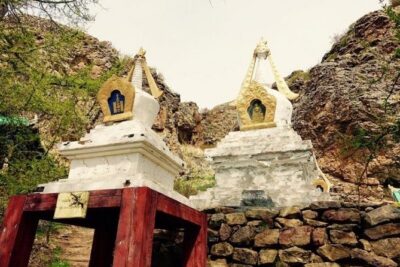
- White Stupa visit to a 30 m, stupa-shaped natural formation tied to fossil mystery stories
- Yoliin Am canyon hike in Gobi Gurvan Saikhan National Park, sometimes with ice that can linger
- Khongor sand dunes and the Singing Dunes sound you hear when the sand shifts
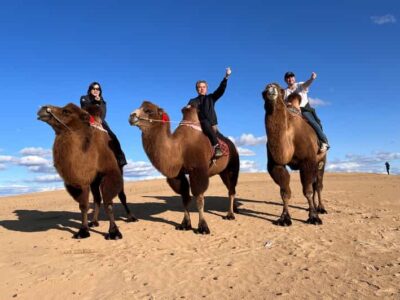
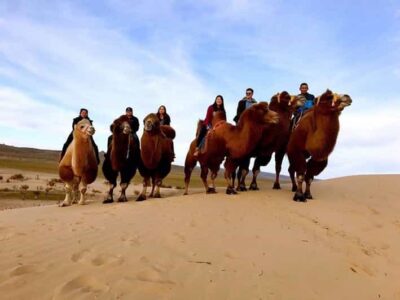
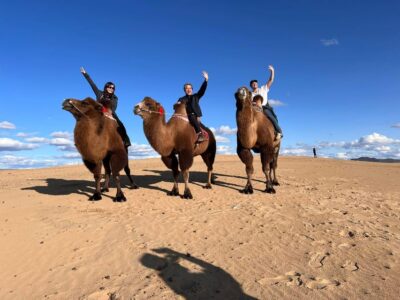
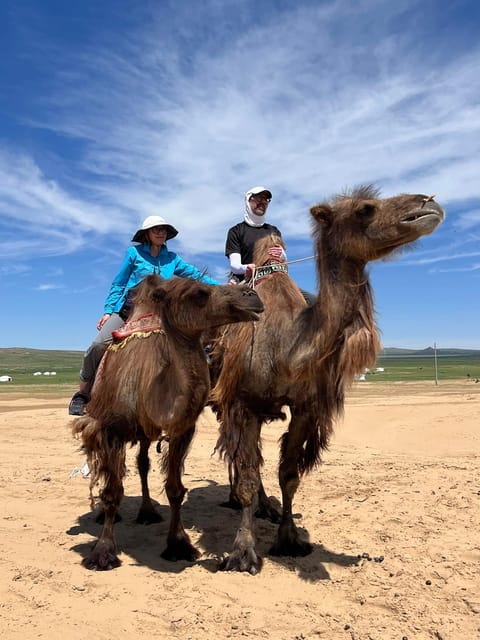
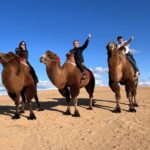
- Camel ride in the dune zone, with classic two-humped Bactrian camels
- Bayanzag Flaming Cliffs with the dinosaur egg legacy of Roy Chapman Andrews
How This 6-Day Gobi Loop Really Feels

This is one of those trips where the best moments come in the in-between spaces. Yes, you’re targeting famous places, but the drive days matter too, because the Gobi shows itself in layers, not snapshots.
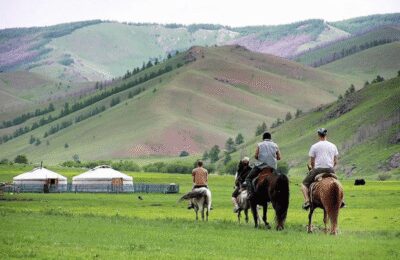
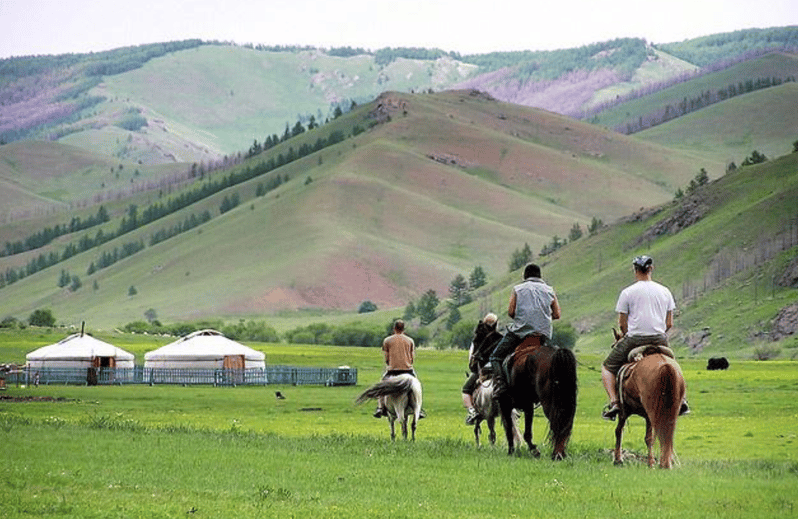
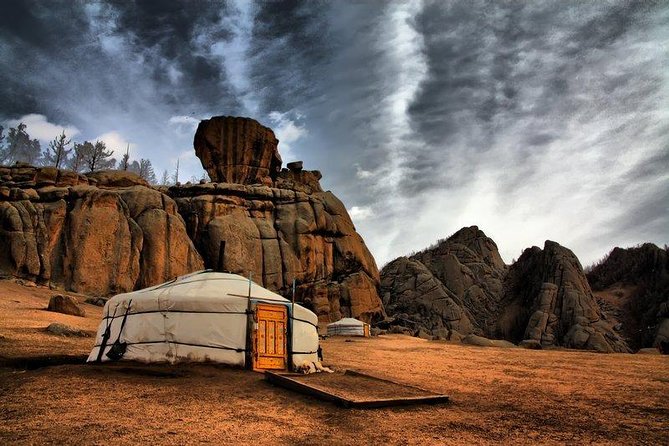
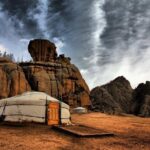
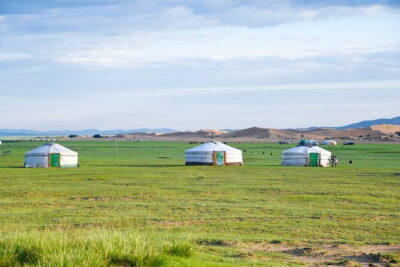
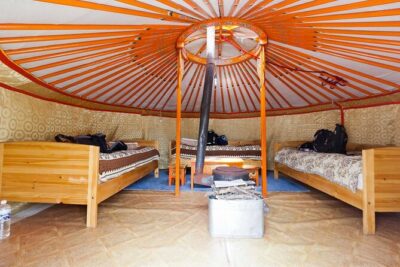
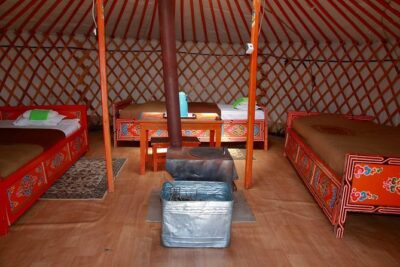
You’ll spend the countryside nights in ger camps, nomadic families’ gers, or tents, with breakfasts, lunches, and dinners planned around the route. That is part of the value here, because you are not adding the usual extra effort of hunting meals and lodging in remote areas.
It’s also a private tour for your group. That can change the whole vibe in the Gobi, where time for short hikes and photo stops often decides whether the day feels rushed or relaxed.
Planning around Ulaanbaatar? A few more to line up:
Day One: Baga Gazriin Chuluu’s Granite Towers and Old Rock Markings
Your first push goes from Ulaanbaatar into the Gobi toward Baga Gazriin Chuluu. The big draw is that this is one of the few rocky areas in the Gobi, so it feels different right away. Wind and erosion shaped granite rock formations into shapes you can actually recognize, not just vague boulders.
There’s also a human layer here. In the mid 18th century, Buddhist monks lived in the area, and you can see temple ruins and inscriptions on the rock. Some historical accounts even tie the site to Chinggis Khaan living there, so the place has a storyteller quality beyond pure scenery.
For your day’s plan, think of it as a practical warm-up. You’re not doing a huge expedition, but you are getting on your feet in the Gobi on a hike with real visual rewards. That matters because it sets you up for the longer walking later, especially in canyon terrain.
Day Two: Driving Past the Lunar-Like World to the White Stupa

After Baga Gazriin Chuluu, the route pushes through broad rocky desert and semi-arid steppe toward White Stupa. This natural feature is about 30 m tall, and it’s known for its abrupt, stupa-shaped slopes.
The best way to understand White Stupa is to picture it as a color and texture moment. Mongolia’s Gobi can look like a landscape of dust, stone, and mystery, but White Stupa adds a sharp, iconic silhouette. You’ll also hear the idea that the area is connected to an ancient ocean, which is why the fossil story comes up again and again in the region.
This day is mainly about getting your eyes adjusted. When you arrive, take time to look at the angles and the way the light hits the slopes, because that’s when the stupa really stops being a stop on a route and becomes a real place.
Entering Yoliin Am: Three Beauties Mountains and a Canyon with Ice

Gobi Gurvan Saikhan National Park is where the trip turns from open desert to dramatic terrain. The park covers mountain ranges at the southern end of the Gobi-Altai system, and the name Gurvan Saikhan, meaning Three Beauties, refers to the highest three peaks, nearly 2,800 m.
The highlight hike is Yoliin Am, often called Bearded Vulture’s canyon. The canyon can hold a high layer of ice that sometimes stays until mid July. That detail is not small. If you go in shoulder season or early months, your walk may include icy patches, shaded ground, and slippery spots.
The route inside the canyon is flexible. You might walk on top or bottom sections, or you may simply see parts of the ice layer depending on conditions. The canyon is surrounded by steep rock, which means you get more shade than you would in the open desert. That’s good for hiking comfort, but it also means the cold factor can hang around.
I like this part of the itinerary because it breaks the pattern. Instead of another dune or another viewpoint, you get a real canyon walk with a chance to see how water and ice shape the Gobi in a narrow space.
A different route out of Ulaanbaatar:
- Ulaanbaatar: Small Group 3-Day Best of Central Mongolia Tour
★ 4.1 · 171 reviews - Terelj national park transport /Best price tour
★ 4.7 · 135 reviews - Ulaanbaatar: Chinggis Khaan Statue and Turtle Rock Day Tour
★ 4.7 · 132 reviews - BEST 5* Chinggis Khaan Airport UBN to Ulaanbaatar Transfer Taxi
★ 5.0 · 116 reviews
Khongor Sand Dunes and the Singing Dunes Effect

Then comes the day most people come for: Khongor sand dunes. These are described as the highest and biggest dunes in Mongolia, and the scale is hard to grasp until you’re there.
You’re heading to Khongoriin Els, known for the dunes’ size and the way they behave. The dunes stretch over 180 km in length, with widths around 3 to 15 km, and average heights about 80 m. The highest dune can reach around 200 m, which helps explain why you feel the horizon change as you climb.
The signature feature is the “singing” effect. When you climb and the sand shifts, the dunes can produce a vibration sound that resembles an airplane noise. You do not have to be a scientist to enjoy it, but it helps to understand that it is the sand movement that creates the sound.
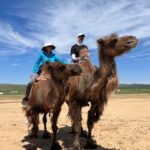
This is also where the camel ride fits in. The tour includes camel riding, and in the Gobi that usually means two-humped Bactrian camels. Even if you’ve ridden elsewhere, this ride tends to feel more like transport through a living desert than a quick photo moment.
If you care about views, treat this as your golden hour day. From the dunes, you can catch sunrise and sunset views, which is the kind of reward that makes a long drive feel worth it.
Bayanzag Flaming Cliffs: Dinosaur Eggs and a Saxaul Forest Nearby

The next big stop is Bayanzag, the famous Flaming Cliffs area. The cliffs are known for their bister red color, and they’re part of why the region became world famous among dinosaur egg and fossil researchers.
Here’s the story you’ll hear directly in context: in 1922, American explorer Roy Chapman Andrews revealed dinosaur fossils and eggs from Bayanzag and neighboring localities. That legacy matters on this trip because you’re not just seeing “cool rocks.” You’re standing in the place tied to one of the region’s defining scientific finds.
Between the cliffs and the open areas, you may also see a saxaul forest nearby. That combination, cliffs plus scrubby tree life, gives you a more complete picture of how the Gobi isn’t only sand. It’s varied, even when it looks dry from a distance.
This portion of the itinerary feels satisfying because it connects day-by-day visuals to a single human narrative. You’re seeing geology, then you’re hearing why it matters.
Returning Toward Ulaanbaatar: Horses, Gers, and a Short City Reset

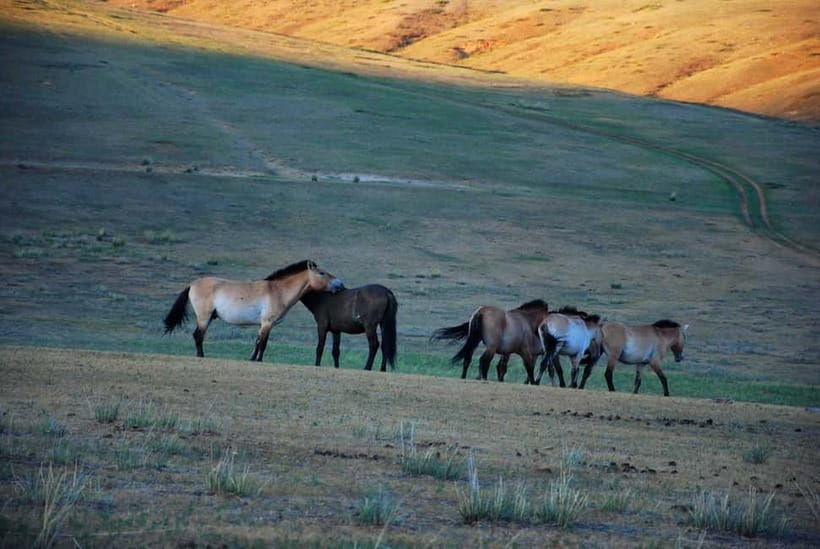
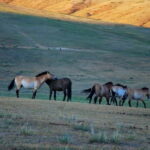
On the final day, you start heading back toward Ulaanbaatar. The route is described as full of everyday Gobi scenes: horse herds crossing roads, smoke from gers fading in the distance, and endless steppe stretches.
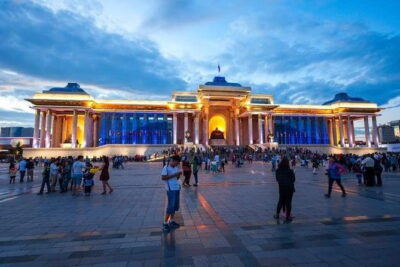
When you arrive, the tour includes a transfer to your accommodation in town. If you have time, you can also get a quick city orientation and shopping with your guide. That’s handy because after days of remote driving, it’s nice to have one place where you can reset, eat in comfort, and pick up practical supplies or small souvenirs.
I like the way the return day is framed. It gives you closure without filling the last hours with another major trek.
Price and Value: What $1,622.60 Per Person Buys You

At $1,622.60 per person for a roughly 6-day trip, this is not a budget-only experience. But it’s also not just sightseeing in name. The included parts are meaningful in a place where everything costs more time and logistics.
Here’s what’s covered:
- Transfers upon arrival and departure
- Ger camp, nomadic family ger, or tent lodging in the countryside
- Park entrance fees
- Camel ride
- Meals: 5 breakfasts, 6 lunches, and 5 dinners
On top of that, this is designed for planning ease. You meet in Ulaanbaatar at 8:00 am, and the tour ends back at the meeting point, with confirmation received at booking.
What’s not included is equally important:
- Hotel or hostel in Ulaanbaatar
- Travel insurance or medical insurance
- Alcoholic beverages
So the real value question is simple: if you like the idea of a guided overland circuit that handles lodging, park fees, and most meals, the price starts to make sense. If you want full independence and you prefer hotel-hunting and eating your own way in the countryside, you might find better value in a different style of trip.
Who This Tour Suits Best (and Who Might Struggle)
This works best for you if you:
- Want to see several iconic Gobi zones in a short time
- Enjoy walking in varied terrain, including canyon hiking
- Like the mix of famous sights and real on-the-ground experiences like ger nights and camel riding
It may feel like a lot if you:
- Hate long driving days and prefer slow travel
- Have trouble with hikes where conditions can include ice in Yoliin Am, depending on the time of year
- Expect a relaxed, minimalist itinerary with lots of free time
The good news is that the tour is described as suitable for most travelers, and it’s paced around a structured route with meals and lodging handled.
Practical Notes Before You Go
A few details from the route planning should shape your expectations.
First, parts of this trip depend on good weather. The cancellation approach for poor conditions is designed to keep you from being stranded without a solution. Still, it’s wise to be flexible if your ideal dates are fixed.
Second, the canyon at Yoliin Am can include lingering ice. If your hiking comfort depends on dry footing, plan for the possibility of slippery shaded ground.
Finally, keep your energy in mind at the dunes and cliffs. These days can be physically demanding because you’re climbing sand and then shifting your attention to rocky viewpoints. Bring a calm pace. In the Gobi, rushing usually just makes you sweat more and see less.
Should You Book 6 Days Color of Gobi Desert?
Book it if you want a focused, guided taste of the Gobi that ties together granite cliffs, stupa formations, a canyon hike, Singing Dunes, and Bayanzag’s dinosaur egg story in one efficient week. The inclusion of ger or tent lodging, park fees, meals, and a camel ride is the kind of practical bundle that makes a remote region feel manageable.
Skip it or look for another option if you want lots of free time, hate hikes in rough terrain, or you’re hoping for purely hotel-style comfort the whole way. The Gobi here is authentic by design, including the nights that put you closer to nomadic life than to modern tourism infrastructure.
If your dates are flexible and you’re okay with weather-driven changes, this is a smart pick for first-time Gobi visitors who want the highlights without missing the meaning behind them.
FAQ
How long is the 6 Days Color of Gobi Desert tour?
The tour duration is about 6 days.
Where does the tour start and where does it end?
It starts in Ulaanbaatar, Mongolia, and ends back at the meeting point in Ulaanbaatar.
What time does the tour start?
The start time is 8:00 am.
What kind of lodging do you stay in during the countryside days?
In the countryside, lodging is in ger camps, nomadic family’s gers, or tents.
What meals are included in the tour?
Breakfast is included 5 times, lunch is included 6 times, and dinner is included 5 times.
Are park entrance fees included?
Yes, park entrance fees are included.
Is a camel ride included?
Yes, a camel ride is included.
Is hotel accommodation in Ulaanbaatar included?
No. Accommodation in a hotel or hostel in Ulaanbaatar is not included.
Is travel or medical insurance included?
No. Travel insurance and medical insurance are not included.
What is the cancellation policy, especially if weather is poor?
You can cancel for free up to 24 hours in advance for a full refund. If the experience is canceled due to poor weather, you will be offered a different date or a full refund.
Latest reviews from Ulaanbaatar
- 6 Days Gobi Desert Tour with complimentary airport pickup★ 5.0 · 3 reviews
- 14 days Combination of Gobi and Central Mongolia★ 5.0 · 4 reviews
- 7 days Great Gobi Tour★ 5.0 · 4 reviews
- Full Day Mountain Biking Tour in Khan Khenty National Park★ 5.0 · 5 reviews
- Kharkhorum, Semi-Gobi 2 days 1 night private trip★ 5.0 · 4 reviews
- 7-Days Central Mongolia Tour and Ancient city in Kharkhorin★ 4.5 · 5 reviews
- Private Ulaanbaatar Tour: Small-Group with a Local Guide★ 5.0 · 4 reviews
- Mongolia Nomad Trek • On-Foot & Horseback ~ 15 Day★ 5.0 · 5 reviews
Gobi Desert Tours, compared.

Semi-Gobi and Kharkhorum overnight private trip
Read our review →
Travel to Gobi by train Visit World energy Center
Read our review →Browse the lists this tour appears in